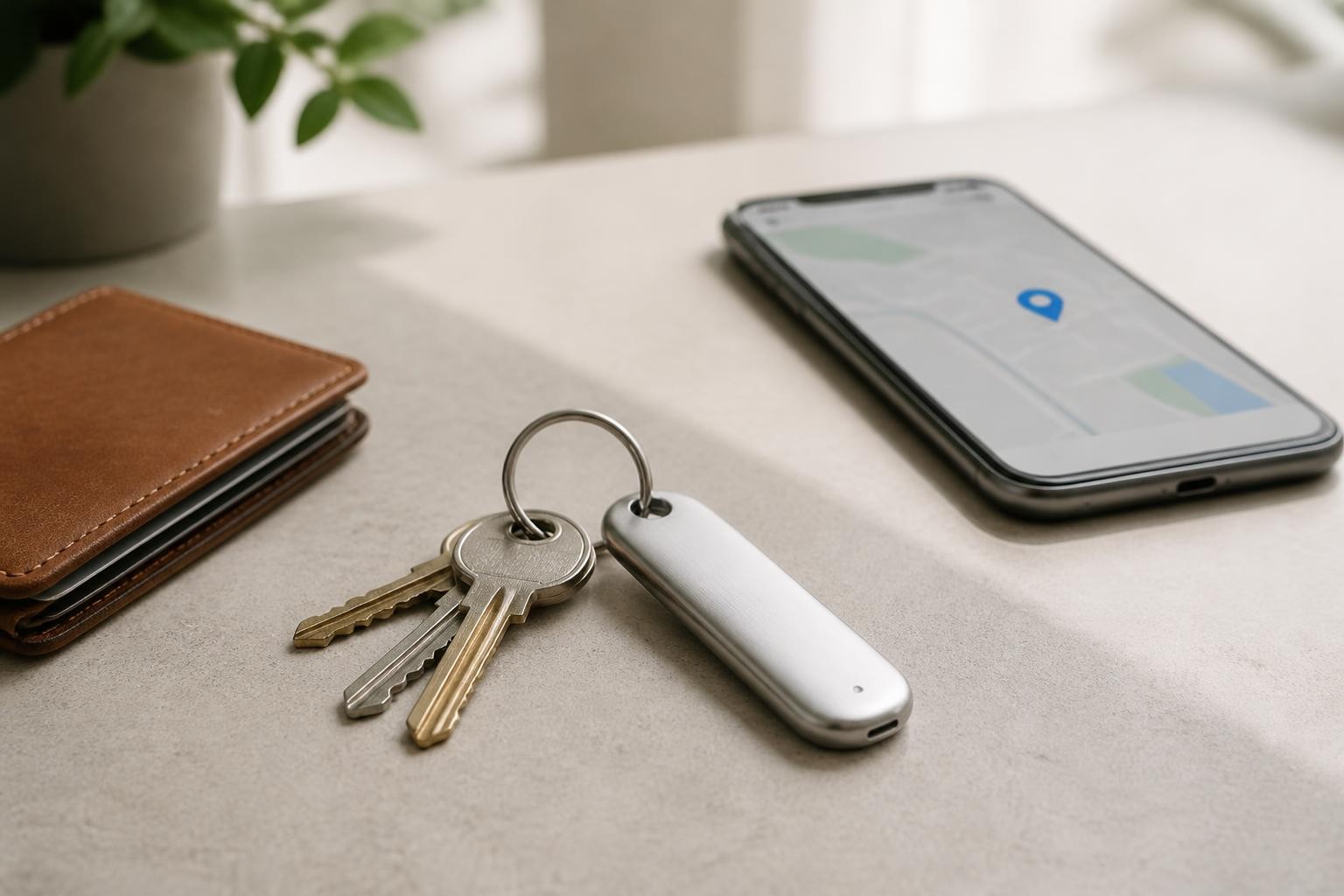
Google’s Pixel Tag is now available, giving Android users a new way to track keys, wallets and luggage. The compact tracker connects to Google’s Find Hub network, which can use nearby Android devices to help locate an item even when it is outside the owner’s Bluetooth range. Google first introduced the accessory in August; November 11 is its retail launch. Its success will depend on both the hardware and the reach of Find Hub.
Pixel Tag price and availability
Google lists Pixel Tag at $29.99 for one or $99.99 for a four-pack. The tracker is not limited to Pixel phones: Google says it works with Android phones running Android 9 or later, including compatible devices from other manufacturers. Local availability and pricing can vary by market.
The launch date and pricing appear in Google’s November 2026 Pixel Drop announcement. The company first detailed the hardware in its official Pixel Tag overview in August.
A slim tracker with UWB and a replaceable battery
Pixel Tag has an elongated design and a built-in speaker that can play a sound when the tag is nearby. A physical button on the tag can also make a paired phone ring, which is useful when the phone itself has gone missing around the house or office.
The tracker is IP67-rated against dust and water and uses a replaceable CR2032 coin-cell battery. Google describes the battery as lasting around a year, depending on usage. A replaceable cell means owners can keep using the tracker after the original battery runs down instead of replacing the entire accessory.
Pixel Tag supports ultra-wideband (UWB) for more precise nearby finding. With a compatible Android phone, Find Hub can show directional and distance guidance rather than only a general proximity estimate. However, basic Android 9 compatibility does not mean every supported phone has the UWB hardware required for this precision feature.
Find Hub is the bigger part of the story
A tracker is only as useful as the network that can detect it when it is out of range. Google says Find Hub includes more than one billion Android devices. When a tag is separated from its owner, nearby participating devices can help report its location so the owner can see an updated position in the app. This is especially useful for luggage or belongings misplaced away from home.
Google says location information shared through the network is encrypted, and Android can alert people when an unfamiliar compatible tracker appears to be moving with them. These protections are important because item trackers can be misused for unwanted tracking. Google’s original announcement describes the network and safety features, while TechCrunch’s launch report covers the design and competitive context.
What Android users should check before buying
Check your phone’s hardware before paying extra for UWB precision finding. The basic tracker experience supports Android 9 and newer, but directional guidance requires a compatible UWB-equipped phone. Make sure Find Hub is available and updated, and consider whether you need a separate case or attachment accessory for keys or luggage.
There are trade-offs. TechCrunch reports that Pixel Tag does not include NFC, which some trackers use to let a person who finds an item tap it with a phone to view owner-provided contact details. Google instead relies on Find Hub’s lost-item and sharing tools. That may work well for many Android users, but it is worth considering if easy hand-back by a stranger is a priority.
Conclusion
Pixel Tag gives Android users a first-party Google tracker with water resistance, a replaceable battery, UWB support and access to a large device-finding network. At $29.99, the single tracker is competitively priced, while the four-pack suits households tracking several items. Its strongest advantage is Find Hub’s potential reach; its main caveat is that the most precise finding features depend on phone hardware. Check compatibility before buying.