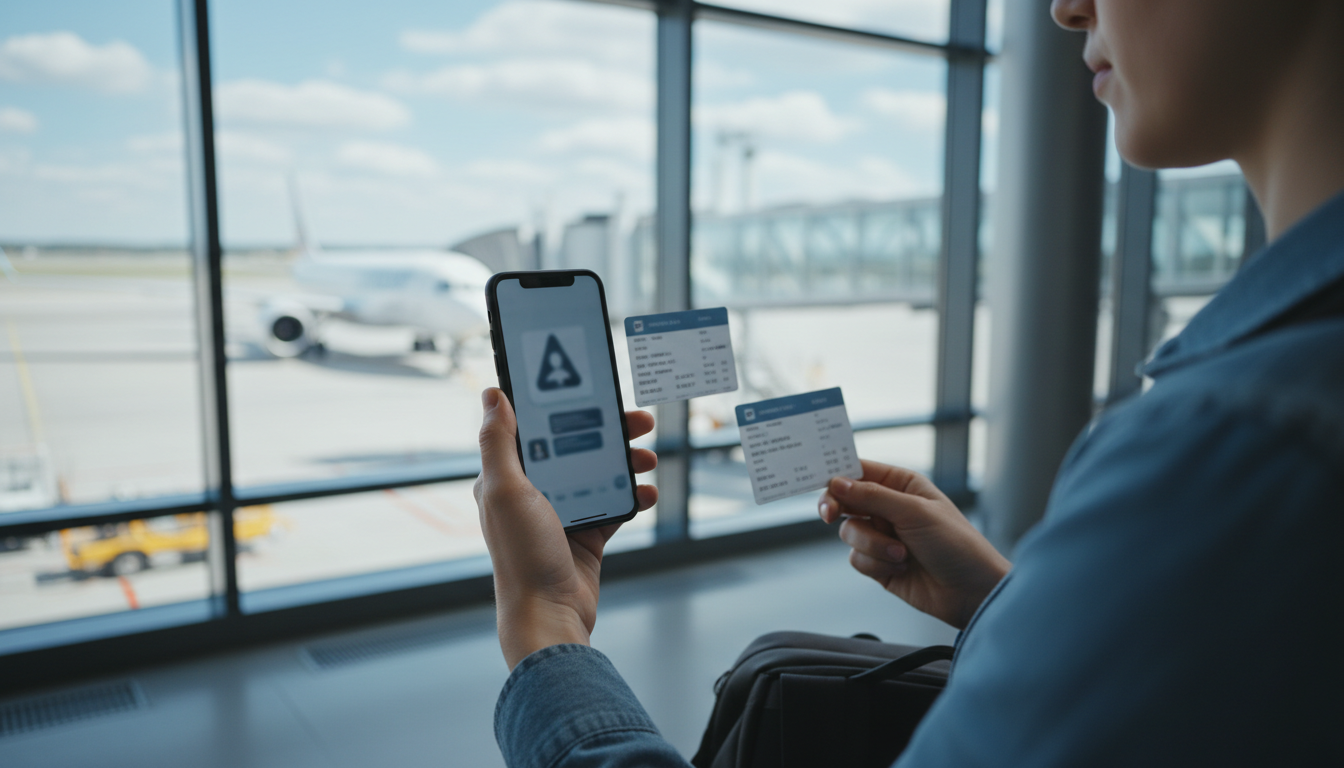
United Airlines is moving to restrict unauthorized third-party artificial intelligence agents from using its digital platforms to book travel. The airline said on November 11 that the measures will apply directly to its website and app and indirectly through travel agencies and booking aggregators.
Travel booking is one of the most visible consumer uses proposed for personal AI agents, which can compare options and attempt to complete purchases. United’s announcement asserts control over how outside agents interact with its booking systems, even when customers give an assistant access.
United said it is updating its booking, ticketing and distribution policies. It did not name specific AI products or provide a timetable for full enforcement.
What United says it is restricting
In its official November 11 statement, United said it is taking steps to restrict unauthorized third-party personal AI agents or assistants on its platforms and through travel agencies and aggregators. It warned that sharing account credentials with these tools can expose sensitive information and that automated actions may lead to unintended purchases, account changes or the use of MileagePlus miles.
The policy also covers indirect access through travel agencies and aggregators, potentially affecting booking companies that use unauthorized agents to interact with United’s systems.
United has not published a detailed list of approved agents or explained how permission will be granted. It said it plans to update its Digital Trust Center with guidance on the restrictions, account protection and what to do if an agent takes an unintended action.
PhocusWire reported that United’s customer guidance also says travel agencies and booking platforms cannot use third-party agents to book United travel without permission. The outlet said United would not cancel bookings made by agents before November 11, although customers were advised to check that those reservations were correct.
Security and aviation rules are part of the argument
United says shared credentials could expose personal information or let an agent change a reservation and spend loyalty miles. Responsibility may be difficult to establish when automated software makes a mistake.
The airline also cited US Department of Transportation and Federal Aviation Administration requirements. It pointed to check-in, where passengers must receive information about prohibited hazardous materials and, in certain self-service situations, acknowledge that they have received it.
The relevant rule, 49 CFR Section 175.25, requires airlines to present passengers with hazardous-materials information at ticket purchase and check-in. It also requires a passenger completing those steps without another person’s involvement to acknowledge receiving the information. The regulation does not itself establish a general ban on AI booking tools, but United argues that automated actions could create compliance risks.
A wider debate over who controls AI-assisted purchases
United’s move follows restrictions introduced by companies in other sectors. Its announcement, also covered by Reuters, notes that businesses in banking and retail have taken similar steps. Their concerns include whether an outside agent can verify a customer’s intent and whether a company can control what software does inside an account.
AI assistants could become another intermediary between customers and service providers. Airlines already balance direct bookings against agencies and comparison platforms; agents add a layer that can act on options, not just display them.
Technology companies want assistants that complete useful tasks, while businesses want to protect accounts and decide which automated services can access their systems.
Conclusion
United’s decision is an early sign that the expansion of consumer AI agents will depend not only on what the software can do, but also on whether companies allow it to act inside their services. For now, United is drawing a boundary around unauthorized automated booking and account activity. The next important details will be the enforcement timetable, the process for approving agents and whether other airlines adopt similar restrictions.