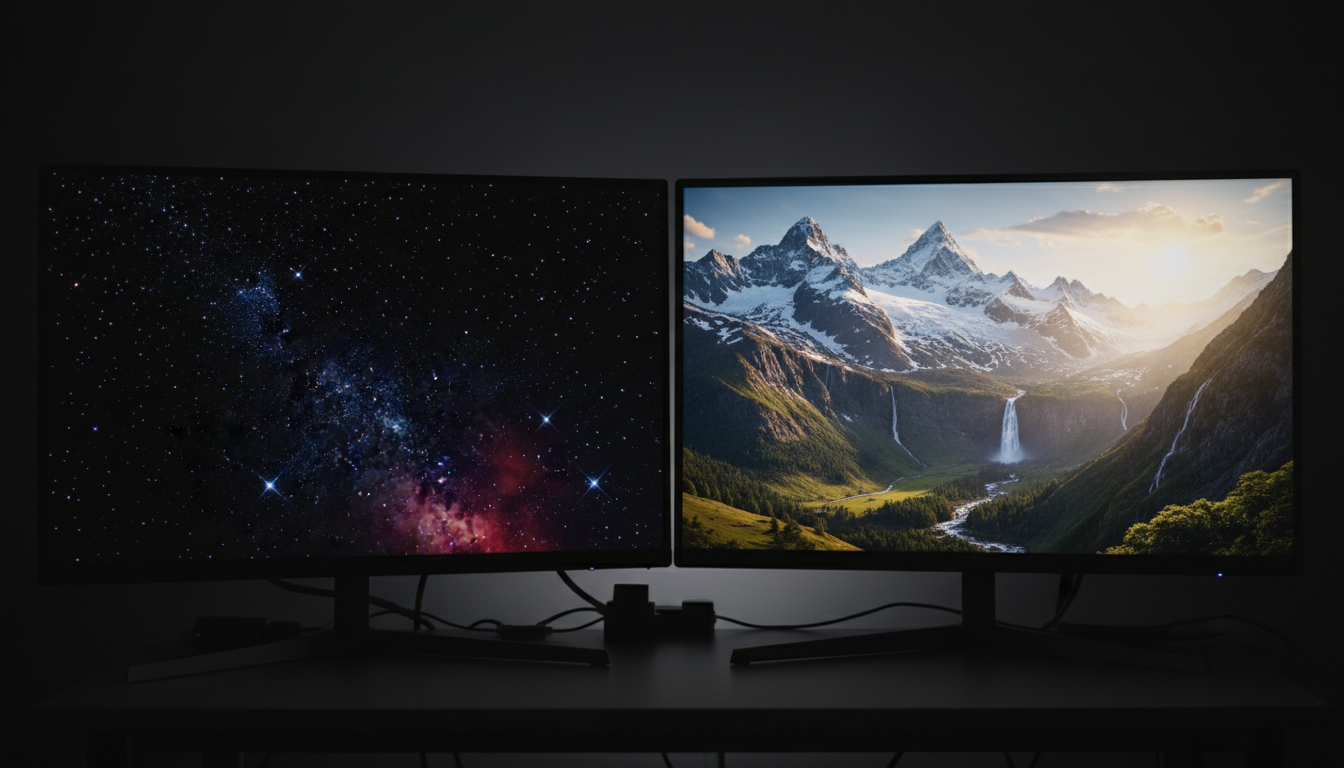
Choosing a new monitor is no longer just about resolution and refresh rate. OLED and Mini-LED displays have become two of the most attractive options for people who want better contrast, HDR performance and a more immersive picture. Both can look excellent, but they work in very different ways and suit different environments.
How OLED displays work
OLED pixels produce their own light, so each pixel can turn off completely when displaying black. This gives OLED screens exceptionally deep blacks and very high contrast, without the haloing that can appear around bright objects on some backlit LCD displays.
OLED monitors are also known for fast pixel response times, which can make motion look especially clear in games. Their weaknesses can include lower sustained brightness than some Mini-LED models, higher prices and the possibility of image retention or permanent burn-in after prolonged exposure to static elements.
What makes Mini-LED different
Mini-LED is a form of LCD backlighting that uses many small LEDs arranged behind the display panel. The screen can dim groups of these lights independently, improving contrast compared with conventional LCD monitors. The number and quality of dimming zones vary widely between models, so the Mini-LED label alone does not guarantee a particular level of performance.
Mini-LED monitors can reach very high brightness levels, making them appealing in bright rooms and for HDR content with large bright scenes. They also avoid the same OLED burn-in concern. However, local dimming can produce blooming or halos around bright objects on dark backgrounds, depending on the panel and its dimming implementation.
Which is better for gaming?
OLED is often the stronger choice for fast-paced gaming because of its near-instantaneous pixel response and excellent contrast. Dark scenes look particularly convincing, and motion can remain sharp during quick camera movement. A high refresh rate is still important, so compare the complete specifications rather than buying based on panel type alone.
Mini-LED can be a better fit for a bright gaming room, especially if you also use the monitor for productivity throughout the day. It can deliver impressive HDR brightness and does not carry the same static-image burn-in risk. A good Mini-LED model can be an excellent all-round display.
What about everyday work?
For documents, spreadsheets and long desktop sessions, text clarity and brightness matter. Some OLED monitors can show subtle color fringing around text because of their subpixel layouts, although this varies by model and pixel density. Mini-LED LCD monitors often behave more like conventional displays for desktop text.
Think about how you use the screen. A person who spends hours editing documents with fixed interface elements may prefer Mini-LED. Someone who prioritizes cinematic games, deep blacks and fast motion may prefer OLED.
Conclusion
There is no universal winner. OLED is generally the choice for contrast, dark-room picture quality and motion clarity, while Mini-LED is attractive for high brightness, productivity and avoiding OLED burn-in concerns. Compare independent measurements of the exact models you are considering, including brightness, local dimming behavior, text clarity and warranty coverage.
Further reading: RTINGS’ detailed OLED vs. Mini-LED comparison.
Leave a Reply