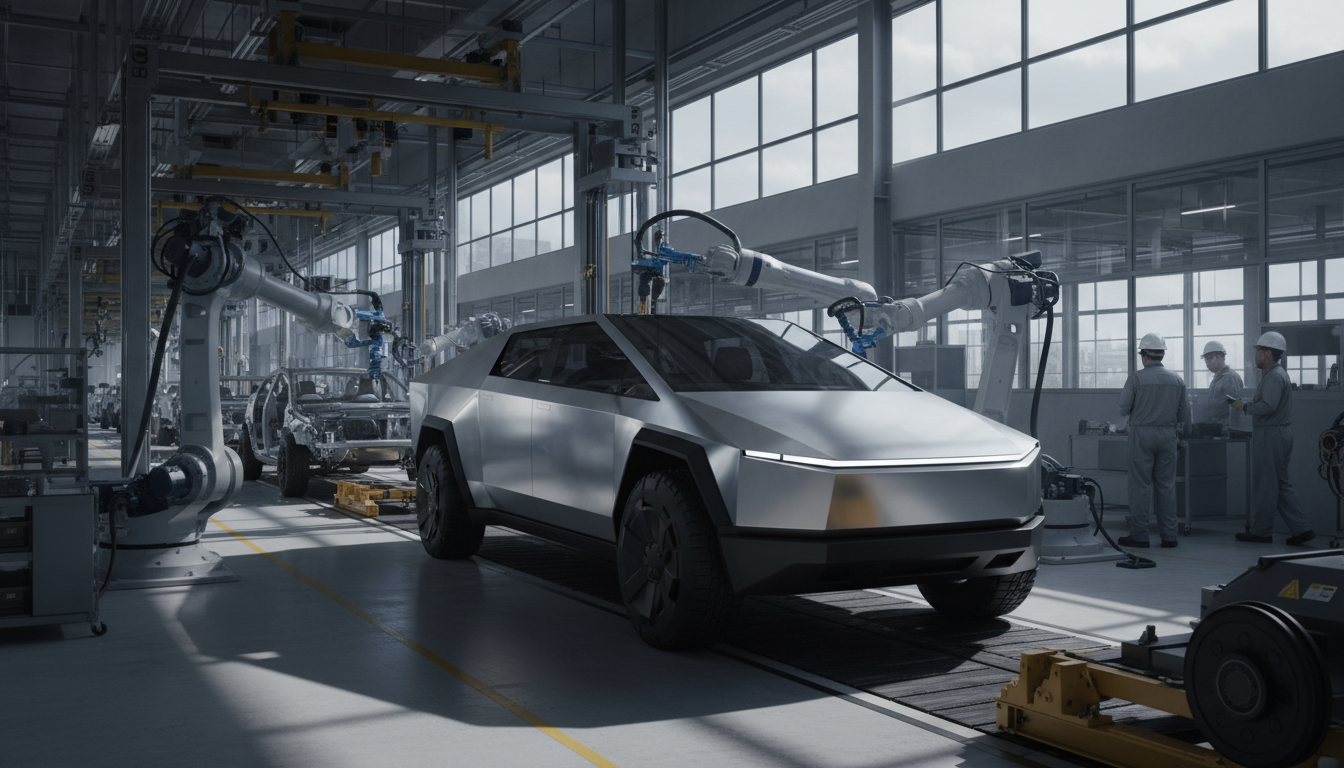
Tesla’s Cybertruck plans are entering a new phase, with CEO Elon Musk saying the company will refund deposits to many customers whose orders cannot be fulfilled before the pickup’s production line closes. The company plans to build as many vehicles as possible over roughly the next eight months before winding down the line around the middle of 2027.
Why Tesla is changing its production plans
The Cybertruck arrived with enormous attention and ambitious expectations. Its angular design, stainless-steel body and unusual launch presentation made it one of the most recognizable electric vehicles on the market. But turning that attention into sustained sales has proved more difficult than the early excitement suggested.
According to Reuters, Tesla plans to redirect resources at its Texas factory toward production of the Cybercab robotaxi. Musk has said the company will increase Cybertruck output in the near term, including by adding a production shift, before the line is wound down. The decision reflects Tesla’s broader effort to prioritize autonomous driving and other future products.
The gap between expectations and demand
The Cybertruck was introduced with targets that implied a much larger market than the vehicle has so far reached. Its high price, distinctive appearance, production complexity and competition in the electric pickup segment have all shaped its commercial prospects. A vehicle can attract intense online attention without becoming a high-volume product.
Tesla’s decision to refund some deposits also highlights the difference between reservations and completed sales. A reservation can signal early interest, but it does not guarantee that a customer will ultimately purchase the vehicle. Pricing, delivery timing, financing and changes in personal circumstances can all affect conversion.
A strategic bet on robotaxis
Redirecting factory capacity toward the Cybercab shows how important autonomous transportation has become to Tesla’s long-term strategy. The company is betting that self-driving services could eventually create a new business beyond selling privately owned cars. That opportunity remains dependent on technology, regulation, safety performance and the economics of operating a fleet.
The transition is not without risk. Reducing production of a high-profile vehicle may disappoint reservation holders and raises questions about how Tesla allocates resources between current products and future ambitions. Robotaxi manufacturing and commercial deployment also face challenges that are different from those involved in building conventional vehicles.
What it means for electric vehicle buyers
For buyers, the announcement is a reminder to distinguish between a manufacturer’s future plans and products that are available today. Anyone considering a Cybertruck should confirm current delivery estimates, configuration availability, deposit terms and service support directly with Tesla before making a decision.
Conclusion
Tesla’s Cybertruck production shift is more than a change to one vehicle program. It reflects the company’s decision to move factory capacity toward its autonomous-driving ambitions after demand fell short of its original expectations. Whether the Cybercab can become a larger success remains to be seen, but the change marks a notable moment for Tesla’s electric vehicle strategy.
Source: Reuters.
Leave a Reply